Telematics is often sold as a way to “improve driving style” and discipline drivers. In practice, especially in large fleets and high-rotation models, the biggest value sits elsewhere: vehicle security, faster response to risk, better fleet management, and lower operating costs.
In operations with thousands of fleet vehicles (including pre-contract cars, replacement cars, and short-term vehicles used by many customers), vehicle telematics is highly rated, but not every feature makes sense. Four elements are usually crucial: GPS location, odometer status, battery voltage (power), and an ignition lock / immobiliser (including remote immobilisation). And geofencing? It’s an everyday tool, especially for fleet vehicle safety.
This is a useful lesson for fleet managers: fleet tracking works best when it supports security and processes (control, planning, reporting), not when it builds a culture of surveillance.
Fleet safety: why vehicle telematics protects the vehicle better than it “fixes” drivers
In real life, accidents and tickets often come not from poor skills, but from operational pressure: targets, stress, fatigue, limited time, and bad planning. Those are factors a system won’t “switch off” with a single speed alert.
That’s why a “we’ll catch them speeding” approach typically has three side effects:
- It increases stress (drivers feel the company “breathing down their neck”).
- It creates a false sense of control (a dashboard lights up, so we think risk is handled).
- It encourages “driving for the system” (to avoid notifications), not necessarily safer driving.
Meanwhile, asset protection is where vehicle telematics is hard and objective: where the vehicle is, whether it’s moving where it should, whether the engine can be started safely, and whether anything looks suspicious (for example, a sudden loss of GPS signal).
Fleet tracking and vehicle security: GPS monitoring for short-term rental, company cars and cross-border trips
High-rotation fleet vehicles: the risk of a stolen vehicle is a daily reality
In a model where one car can be used by many customers in a single day, the biggest challenge is operations and settlement. This is where fleet tracking brings real peace and reassurance: you have a single source of truth about the vehicle, no matter who has the keys.
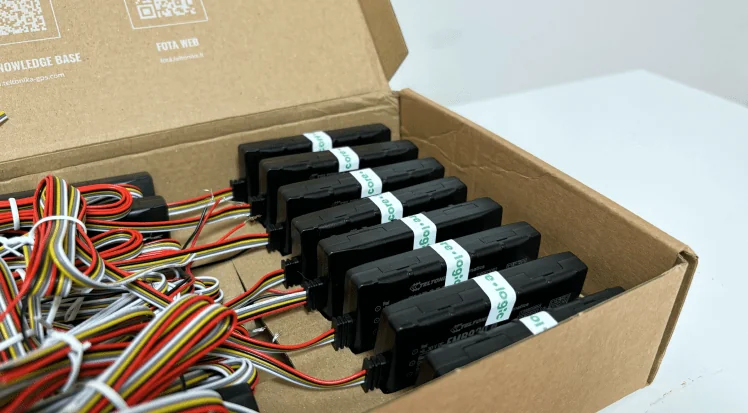
With GPS fleet tracking (a GPS tracker installed in the car), you can quickly answer:
- Where the car is (precise location in real time) and whether it’s returning as agreed.
- Whether it’s parked in an unauthorised place.
- Whether it’s moving in a way that suggests abuse (unusual route, unusual hours, outside business operations).
This is especially important for preventing theft and responding fast if a stolen vehicle scenario emerges.
Real time GPS location: the first minutes matter
If the tracker shows unexpected movement, your team can react immediately, within the first 5–15 minutes, when recovery chances are highest. That’s one of the biggest practical benefits of fleet safety tools: faster decisions, less confusion, and less money lost.
Geofencing for fleet vehicle safety: alerts for unauthorised movement, not just speed
Geofencing (zones) works extremely well as a fleet safety and vehicle security layer: when a car crosses a defined boundary, you instantly see that “something is wrong.” Most often, it’s linked to theft and export attempts, especially cross-border cases.
In practice, geofencing makes the most sense when:
- You define allowed zones (e.g., Poland / EU / the UK, or specific regions).
- You define forbidden or high-risk zones (selected countries, border areas, ports, transfer hubs).
- You have a clear escalation procedure for what happens in the first 5–15 minutes after an event.
For many organisations operating across the EU and the UK, geofencing is a simple way to detect unauthorised movement early, before the car disappears for good.
Driver behaviour and driver performance: when speed alerts help and when they hurt efficiency
Speed alerts should not be the core of your fleet safety story. They can help, but mainly in narrow, clearly defined cases.
When alerts can help
- Special zones: construction sites, plant yards, warehouses, pedestrian-heavy areas.
- New drivers / onboarding: short-term support, not permanent monitoring.
- Incident-based use: when something happened and you need data to analyse risk and driver behaviour.
When alerts create stress and “theatre of control”
- A constant “we’re watching you” mode that drivers experience as surveillance.
- When notifications are treated as proof of safety management, while systemic actions are missing (work hygiene, route planning, reducing operational pressure).
- When alerts fire in bulk and no one separates real risk from noise.
If the goal is safety, it’s better to have fewer alerts, but each with a clear meaning and a clear process.
Fleet management data for incident response: facts instead of blame (and a path to lower insurance premiums)
The biggest mindset shift is moving from “who is at fault?” to “how fast do we protect assets and limit losses?” This is especially important for shared company cars also when private use is allowed under clear rules (for example, separating business and private trips by time windows).
Practical examples of how vehicle telematics supports fleet management:
- Battery voltage / power: a sudden drop is a real risk signal (breakdown, delays, roadside assistance costs). Here telematics is preventive and reduces downtime.
- Odometer: supports service planning, inspections, leasing terms, and vehicle rotations, fewer costly surprises.
- GPS + trip history: during a claim, a fine dispute, or a conflict—data resolves cases faster than phone calls and assumptions.
- Geofencing: triggers protective actions before the car becomes a fully stolen vehicle case.
- Route and fuel analysis: improves efficiency and reduces costs, without pushing all responsibility onto drivers.
For many businesses (including those operating in the UK and EU), well-documented incidents and consistent tracking data can also support better conversations with insurers and, over time, help defend risk controls that may influence insurance premiums.
Vehicle maintenance as fleet safety: the essential “quiet” signals that prevent expensive downtime
In high-rotation fleets, “small” technical issues quickly become big operational problems. That’s why vehicle maintenance signals from telematics are so valuable:
- You see risks early (battery voltage trends, unexpected inactivity, repeated low-power events).
- You plan service based on real usage (odometer and patterns).
- You reduce failed starts, no-shows, and cascading customer issues.
Combined with a properly configured immobiliser (including remote immobilisation where appropriate and lawful), you get a practical industry standard toolkit that protects assets without turning the company into a policing unit.
Conclusion: fleet vehicle safety as a process, not a bat for drivers
In rental fleets and high-rotation corporate fleets, the most valuable features are the ones that:
- Protect the car (GPS fleet tracking, location, geofencing, immobiliser, ignition control).
- Support planning and operations (odometer, service scheduling, battery power prevention).
- Enable fast incident response instead of punishment (clear notifications, events, and procedures).
That’s telematics in the service of responsibility: fewer emotions, more facts, faster decisions and stronger fleet safety without building a culture of constant surveillance.