Fleet telematics has an unclear status today: on one hand, fleet telematics is treated as an “obvious standard,” while on the other it still creates resistance, emotions, and many misunderstandings. In practice, telematics systems are neither a tool for “tracking people” nor a magic lever that fixes fuel costs and operational costs on its own. Fleet telematics systems are primarily a data infrastructure that supports fleet management in safety, compliance, and fleet operations. Real operational efficiency, meaningful reduce costs outcomes, and daily predictability appear only when telematics solutions are connected to processes and fleet policy. If not, telematics data often ends up as charts in a dashboard, without changing decisions.
In this article, we debunk three myths, show practical scenarios, and explain what does fleet telematics provide in real conditions. The conclusion is simple: telematics technology delivers the biggest value when it “lands” inside a working process—rather than remaining just vehicle data in a system.
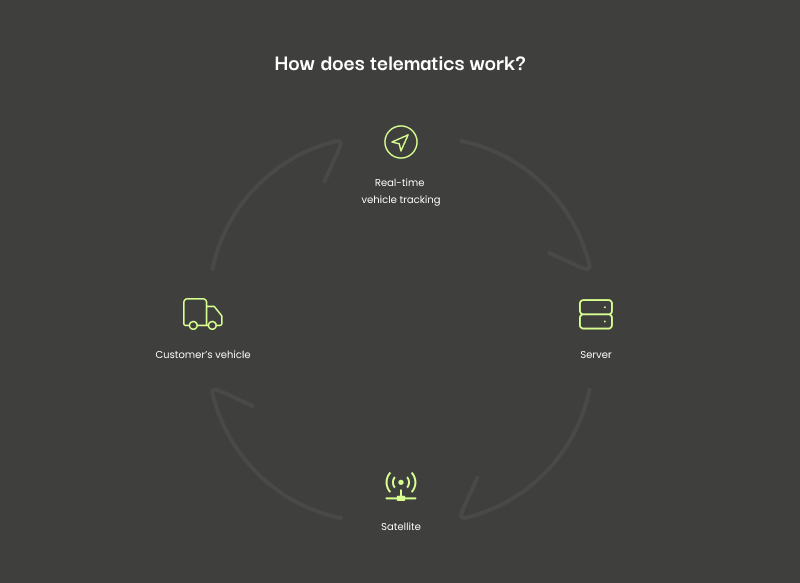
Real-time telematics systems: what they measure and what they can’t replace
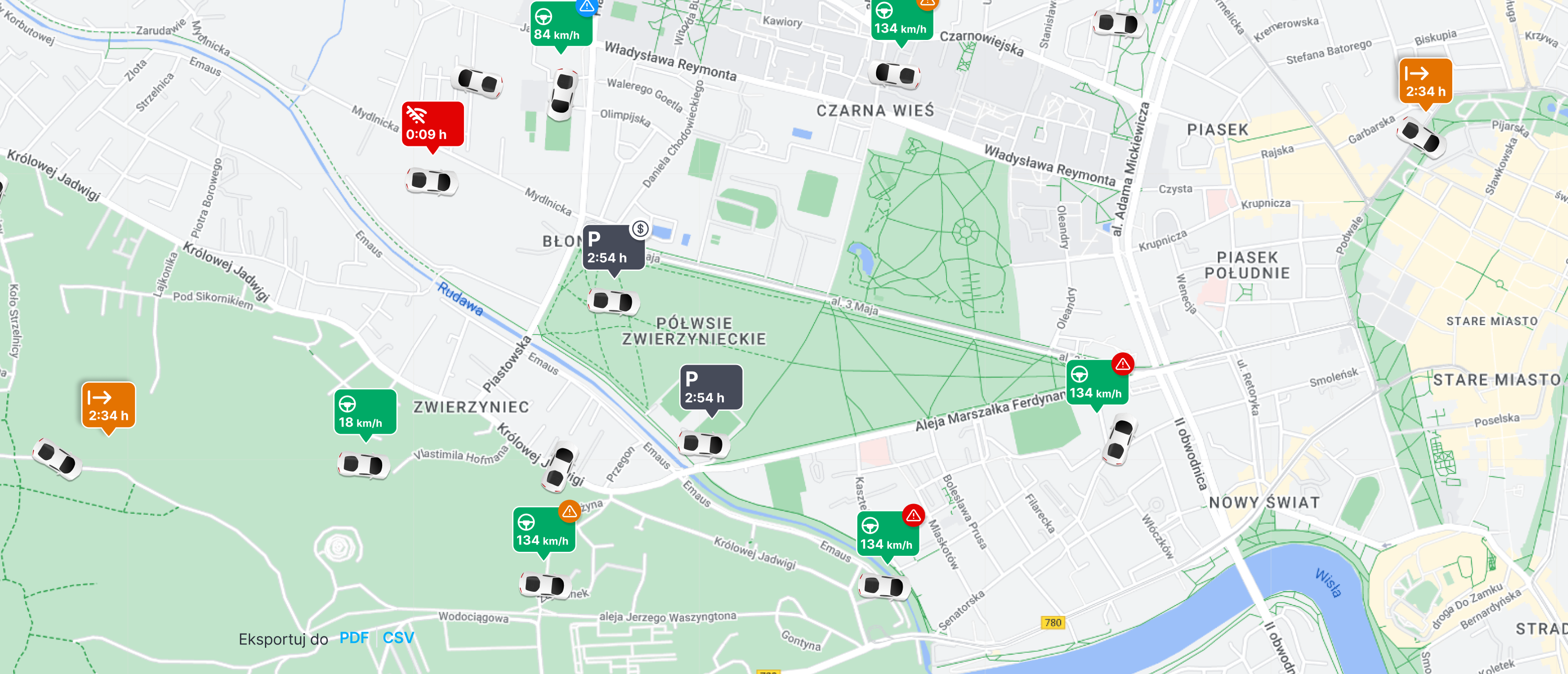
Modern telematics systems deliver real time data about routes, events, driver behavior, and vehicle condition. With this, vehicle tracking and data analysis support effective fleet management, especially when vehicle fleets operate across many locations and many users. In practice, telematics devices collect:
- vehicle location and trip history in business mode, helping to track vehicle locations when needed
- driver activity signals and overall vehicle utilisation for fleet operators and fleet managers
- factors that affect fuel consumption, fuel usage, and fuel use, supporting fuel efficiency and the ability to reduce fuel costs
- risky events such as harsh braking, speeding patterns, and other road-rule breaches that impact driver safety and insurance exposure
The key point: fleet telematics can be the foundation for better decisions, but it does not replace leadership, communication, or enforcement. Even sophisticated systems cannot compensate for missing rules, unclear accountability, or weak follow-up, because telematics provides exact data, not automatic decisions.
Privacy and personal data protection: respecting driver privacy in practice
In mature implementations, privacy is solved through rules, not emotions. The core topics are personal data protection, driver privacy, and a clear privacy approach inside a fleet management system. Most organisations use practical standards such as:
- business/private mode switching (often via a mobile app)
- limiting location data collection in private mode
- transparent communication: why the company collects telematics data and who can access it
- clear procedures: what happens when anomalies or policy breaches are detected
These rules are essential. Without them, even the best telematics solutions and the most advanced telematics systems create resistance, and implementation can get blocked at the compliance stage. In other words, fleet telematics requires governance as much as hardware.
Myth 1: “Fleet telematics limits privacy because it tracks the driver”
Fact: in mature deployments, fleet telematics is mainly used to detect anomalies, not to “watch a person.” The real value is rarely a map view. It is the correlation of vehicle data that helps spot cost deviations and operational risks early. The most common analysis areas include:
- fuel–mileage mismatches (fuel transactions do not match kilometers), often linked to fuel theft concerns
- excessive mileage and “out-of-contract” kilometers for company vehicles
- misuse of private trips (for example, weekends beyond agreed limits)
- risk patterns and driver behaviour, including harsh braking and speeding trends that affect driver safety
- operational events: damages, theft, failures, and other risks identified through patterns
A practical takeaway: instead of debating “are you tracking us,” start with a better question, what anomalies do we want to detect, and what decisions will we make based on the data from fleet telematics systems?
Myth 2: “Telematics changes driver behavior”
Fact: telematics alone does not change driver behavior. It can measure driving style precisely and enable driver behavior monitoring, but it does not replace work with people. To translate data into lower risk, better results, and safer driving outcomes, you need:
- communication about why the company uses fleet telematics
- rules and consequences embedded in fleet policy
- incentives (targets, bonuses, gamification) that encourage safer driving practices
- education and coaching—short cycles, webinars, reminders, and driver training
- HR support and consistent enforcement by managers
Only then do you see real impact: improved driver safety, the ability to improve driver safety, fewer incidents, and reduced fuel consumption, often through consistent feedback and coaching. Telematics measures; the organisation changes.
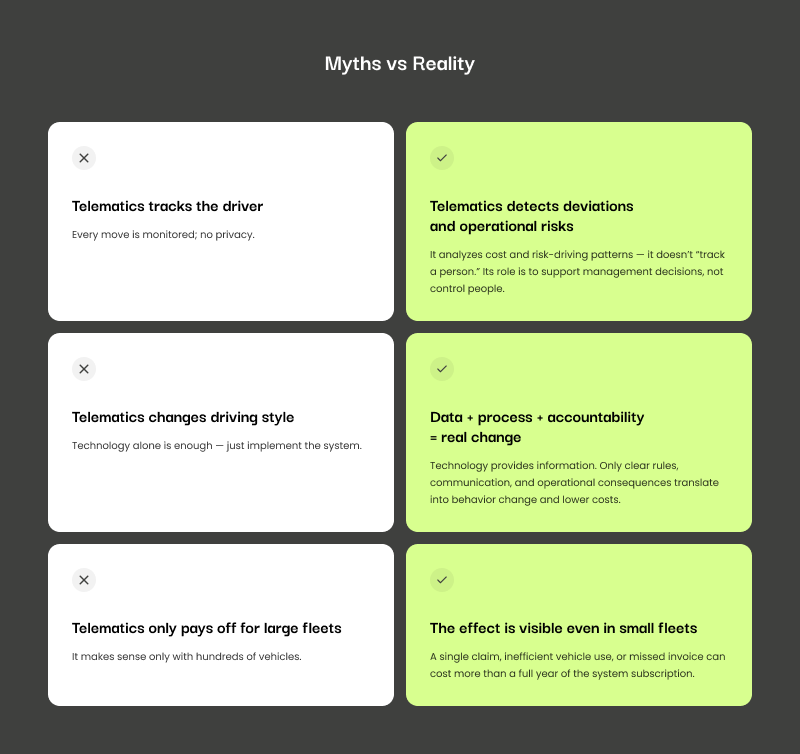
Myth 3: “Telematics is only for large vehicle fleets”
Fact: meaningful results appear even in fleets of 20–50 vehicles. In smaller companies, processes are shorter, decisions are made by 1–2 people, and fleet managers often notice cost anomalies and policy abuse faster. A common SME scenario is that telematics seems unnecessary “until the first time”—until a damage event, misuse, or billing error costs more than a yearly subscription. Then fleet telematics stops being a gadget and becomes a practical cost-and-risk control tool for fleet operations.
So the real question is not “from how many vehicles,” but whether you currently manage costs and risks by intuition rather than with exact data.
Private trips, fuel, and abuse: why data correlation reveals what single reports miss
The real value of fleet telematics is found in simple correlations. Linking telematics data with fuel-card transactions and service records supports better process control and real reduce costs outcomes.
1) Misuse of private trips
Fleet analytics often shows that some vehicles are used mainly privately, even though the company finances them for business purposes. The result is predictable: excessive mileage, contract overages, higher servicing needs, and increased fuel usage. Once rules are clarified and the organisation uses data consistently, it becomes easier to set fair mileage limits and reduce repeated exceptions.
2) Fuel transactions that “don’t match”
A classic pattern: a fuel card shows refuelling, but later a breakdown suggests the wrong fuel or a mismatch in timing. Only combining time and place of the transaction with GPS activity and vehicle movement can reveal inconsistencies. This is a clear example of how vehicle tracking, GPS tracking, and analysis protect the fuel spend budget.
3) “Strange” operating costs and unplanned downtime
Telematics systems can highlight unusual cost patterns: higher fuel consumption in similar vehicles, unusual operating spend, or signals that point to unplanned downtime. Some cases are not fraud but operational mistakes: wrong vehicle choice for a task, inconsistent standards, or chaotic settlements. That’s why data analysis is so valuable—because it turns assumptions into measurable facts.
Resistance to telematics is usually about trust, not technology
Resistance is usually about trust, not whether a vehicle's GPS tracker works. In many organisations, people fear that fleet telematics and vehicle tracking will become excessive supervision—watching employees instead of supporting operations. That fear is understandable: “someone will look at every move.” This is why implementation must clearly separate fleet management from employee evaluation and show a realistic goal: safety, compliance, and predictable fleet operations.
Modern telematics systems increasingly move away from obsessing over route maps and focus on what truly drives cost and risk: fuel consumption, abnormal fuel patterns, mileage deviations, contract limits, damages, and unsafe driving patterns. In this context, driving-style analysis is not for punishment—it supports safer driving, fewer incidents, and more stable service planning. Better patterns can also influence insurance premiums, insurance costs, and total risk over time.
When processes don’t keep up
To ensure fleet telematics supports the business without crossing boundaries, you need consistent rules and clear compliance logic. Implementation should cover access rules, retention periods, and a clear purpose for collecting data. Increasingly, private mode is a standard feature—either through an app switch or driver identification. This allows fleet telematics systems to protect company assets and improve transparency without intruding on personal privacy.
A common paradox is that even the best telematics implementation can “stall” if the organisation has no plan for what to do with outcomes. Telematics data can detect risks, but if nobody knows who decides, how to document actions, and how escalation works, reports remain reports. This is why most fleet managers emphasize that data is not enough—you need thresholds, roles, and procedures that convert information into decisions.
The biggest value comes from correlating telematics data, not from one dashboard
The biggest benefit appears when you don’t look at a single report but combine signals. Correlating fleet telematics with fuel cards, service records, and operating costs shows where the budget is leaking and where true optimisation exists. In transport operations, combining refuelling time and place with GPS activity can reveal fuel–mileage mismatches, refuelling outside normal patterns, or situations where fuel cards are used for purposes other than declared. Sometimes unusual costs reveal an operational issue rather than bad intent, and data helps clarify facts inside the organisation.
Fuel efficiency, fuel consumption, and driver behavior: practical savings
In many fleets, fuel is the biggest operating expense, which is why fleet telematics is essential for controlling fuel consumption, improving fuel efficiency, and managing fuel costs. In practice, it provides three advantages:
- Driving style analysis: high RPM, aggressive manoeuvres, and high speeds raise fuel consumption. Regular feedback and coaching based on driver behavior can reduce fuel burn and improve safety.
- Identifying operational inefficiencies: often the problem is not “who drives,” but inefficient task allocation, empty miles, poor planning, or weak utilisation. Telematics turns intuition into numbers.
- Reporting and consistent work with users: the biggest effect comes from routine—monthly reporting, short conversations, and defined thresholds (fuel burn, mileage, number of events) that trigger specific actions. Without routine, fleet telematics becomes “a collection of charts,” and the goal to reduce costs and reduce fuel use won’t happen.
Fleet operations in transport and CFM: one source of truth
In a CFM-style (Car Fleet Management) model, fleet telematics becomes a “source of truth” for many processes at once: mileage vs contracts, service, damages, fuel settlements, and reporting. Properly implemented telematics solutions increase operational efficiency and reduce errors by automating data collection in one place. This matters especially for transport and field operations, where real time data helps respond faster, reduce downtime, and support regulatory compliance.
Telematics implementation: why process matters more than charts
Technology will not solve the problem if the organisation cannot answer:
- what we do when we detect abuse
- how we settle private trips
- what limits and consequences apply
- who approves exceptions
- how we ensure privacy and personal data protection
- what happens when a driver loses permissions
That is why telematics implementation must be paired with policy, procedures, and enforcement. Only then does fleet telematics become a real tool for fleet management, fleet operations, and improved decision-making—not just a dashboard.
What does fleet telematics provide in practice?
Fleet telematics will not change people for you. But it provides exact data that helps organise costs, risks, and processes faster than almost any other tool. When modern telematics systems are connected to fleet policy, HR support, and compliance rules, telematics stops being a controversy and becomes a standard for controlling company vehicles, improving driver safety, strengthening compliance, and reducing operational costs through better decisions on fuel, maintenance, and risk.