A few years ago, fleet management was mainly associated with vehicle records, mileage control, service planning, vehicle maintenance and cost analysis. Today, that is no longer enough. Vehicles are mobile assets that generate data, risk, costs and warning signals every day. Without the right tools, much of this information remains invisible until damage, failure, vehicle downtime or loss of control over the asset has already become a fact.
In the leasing industry, the stakes are particularly high. A leasing company finances vehicles but does not have full operational control over them. Passenger cars, vans, electric vehicles and vehicles used in transport fleets are operated intensively by different drivers, in different locations and with different levels of compliance with the contract.
This is why fleet telematics is no longer just a technological add-on. It is becoming a key part of modern fleet management. It is not only about GPS tracking. It is about data that helps reduce costs, improve safety, minimise risk and support better decisions across the entire fleet of vehicles.
Fleet management can no longer rely only on declarations
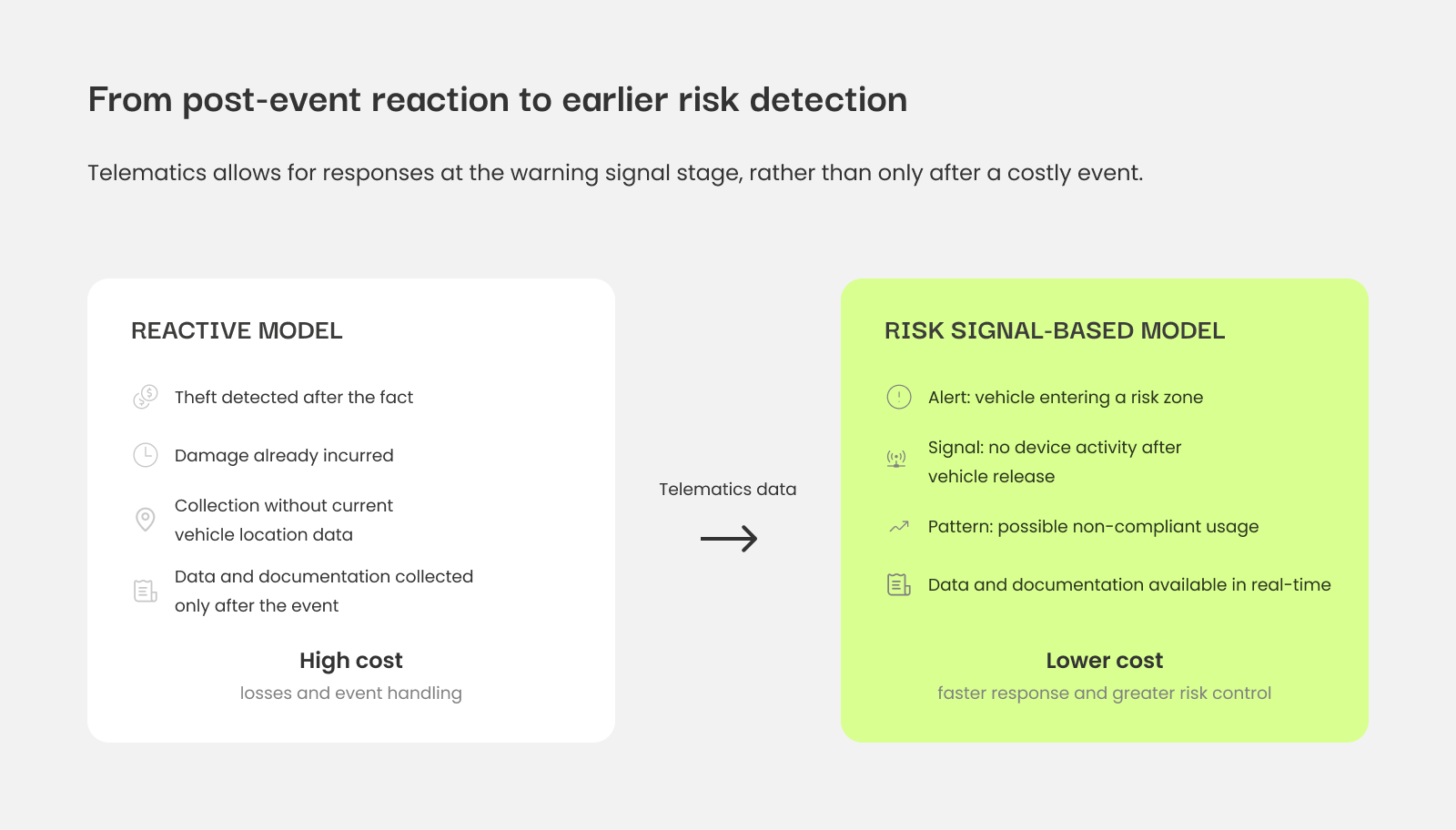
The traditional model of managing vehicles has one fundamental weakness: it often relies on data that arrives too late. A fleet manager may only learn about a problem after a claim has been reported, a budget has been exceeded, a breakdown has occurred, a vehicle has been lost or the contract is being finally settled.
In practice, this means that fleet management becomes reactive. The company responds only after the problem has already generated a cost. A telematics system changes this by making it possible to notice early signs of risk much sooner. These may include an unusual route, a long stop in an unexpected place, speeding, sudden loss of signal from a telematics device, increased fuel consumption or driver behaviour that differs from the agreed standard.
For a leasing company, this type of data is highly valuable. It supports a better assessment of vehicle usage, claims risk, potential problems with asset recovery and the impact of everyday operation on residual value. This moves fleet management away from spreadsheets and towards a process based on operational data.
Fleet telematics gives an advantage that classic vehicle monitoring does not
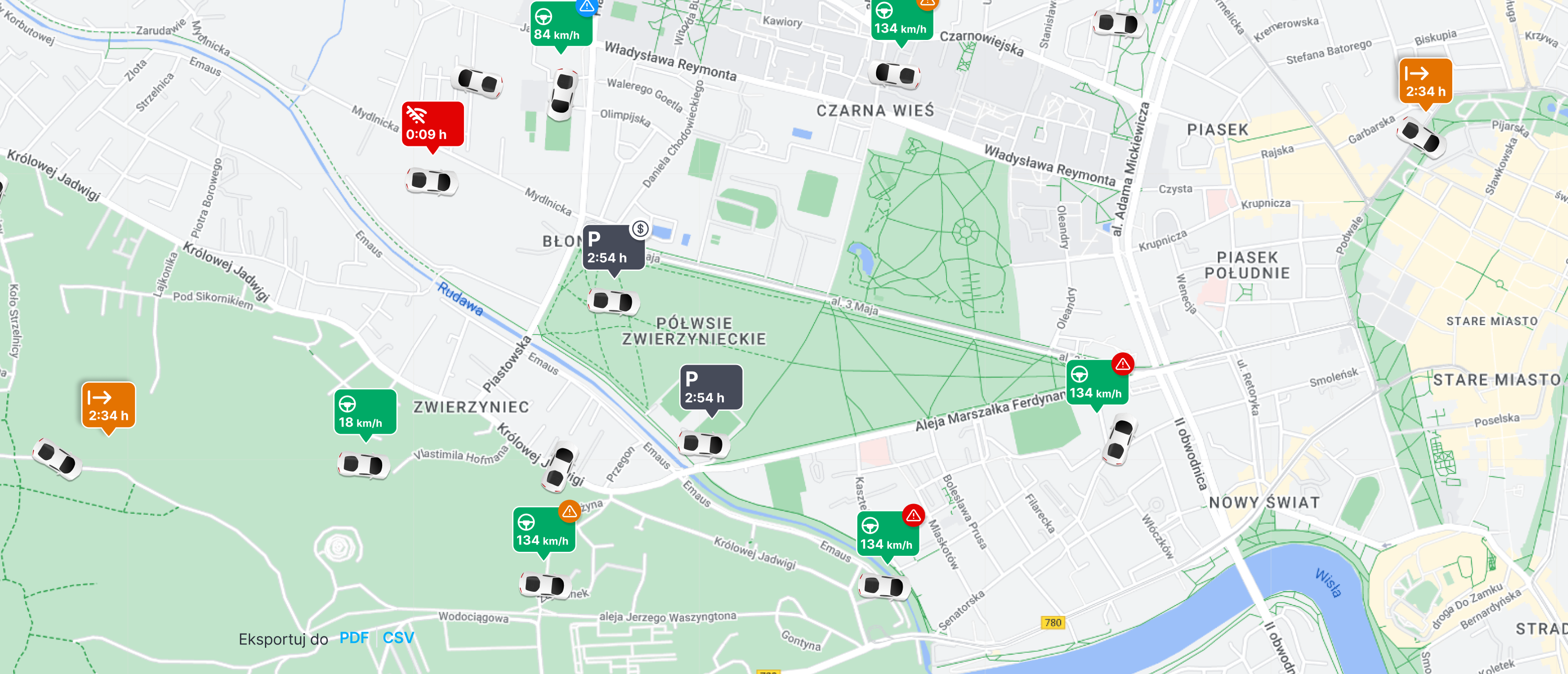
The greatest value of vehicle telematics is access to real-time information. Vehicle location, route analysis, driving behaviour monitoring and event alerts are no longer only part of a historical report. They become data that allows organisations to react immediately.
Real-time vehicle monitoring allows companies to track the location of fleet vehicles on an ongoing basis, which improves fleet efficiency and supports faster decision-making. At any moment, fleet managers can see where a vehicle is, whether it is being used as expected and whether there are deviations from its typical operating pattern.
Vehicle location is useful not only for asset recovery. GPS data also supports route planning, driver hours analysis, cost control, operational costs monitoring and the assessment of vehicle usage. As a result, GPS tracking becomes part of a broader fleet management system, not only a tool for checking a point on a map.
Driver management and driver behaviour as a source of real savings
In many companies, fleet costs increase not because the vehicles were poorly selected, but because the way they are used is not visible and controlled well enough. Driver identification makes it possible to assign specific events to people, not only to registration numbers. This allows fleet managers to analyse driver behaviour, respond to risky patterns and manage drivers based on facts.
In many organisations, costs do not rise because the fleet of vehicles is wrong. They rise because vehicle usage is not visible in real time. Driver identification changes this: every event has an owner, not only a registration plate.
Data on driving behaviour is valuable only when it leads to specific action: a conversation with the driver, driver training, a route change or an adjustment to fleet policy. A report without action does not change anything. This applies especially to areas such as speeding, harsh braking, aggressive acceleration, driving outside working hours or unjustified stops. Driver behaviour monitoring helps improve driver safety, supports accident prevention and can have a positive impact on fuel efficiency.
It is important to stress that well-implemented fleet management solutions should not be seen only as control tools. In the best organisations, driving behaviour data is also used to motivate drivers, support training programmes and reward safe habits. This increases acceptance of the system and makes safety improvement the result of conscious management rather than pressure.
Fleet costs, fuel management and cost control in a business fleet
Fleet management plays a key role in controlling operating costs and company profitability. Controlling a company’s fleet is not only about knowing where vehicles are located. It is also about measuring which areas generate the highest costs and where they can be reduced without lowering the quality of work.
In practice, this may mean fewer empty runs thanks to better route planning, lower claims handling costs thanks to earlier risk detection or shorter asset recovery time in debt collection processes. Each of these effects is measurable, and each appears not because of technology alone, but because the right data reaches the right person at the right time.
This makes it easier to reduce fuel costs, reduce fuel consumption, control fuel usage, improve fuel management and increase operational efficiency across the organisation. Better data can also help save fuel, improve efficiency and support cost savings across the whole business fleet.
For leasing companies, this creates additional service value. Clients do not receive only vehicle financing. They receive a more complete solution that supports fleet management, reporting, fleet operations and cost optimisation. As a result, fleet telematics can strengthen the relationship with the client and increase loyalty towards the leasing company.
A fleet telematics system creates value only when data leads to action
What are the key benefits of using telematics? The most important ones include better safety, lower costs, faster vehicle location, more effective vehicle monitoring, better fuel management, higher data quality and the ability to make more accurate business decisions.
Installing a telematics device is not enough. If data is not analysed, alerts do not reach the right people and processes do not define how to react, a fleet management system becomes just another tool. Real value appears only when the organisation knows what to do with the information: who analyses it, when they respond, how the event is documented and how the data is used to improve processes.
This is why FleetOnAir looks at fleet management more broadly than only through vehicle location. It is a fleet management solution that supports data analysis, driver safety, fuel management, vehicle monitoring and operational work from any location.
Fleet management software should connect GPS tracking, mobile apps and fleet data
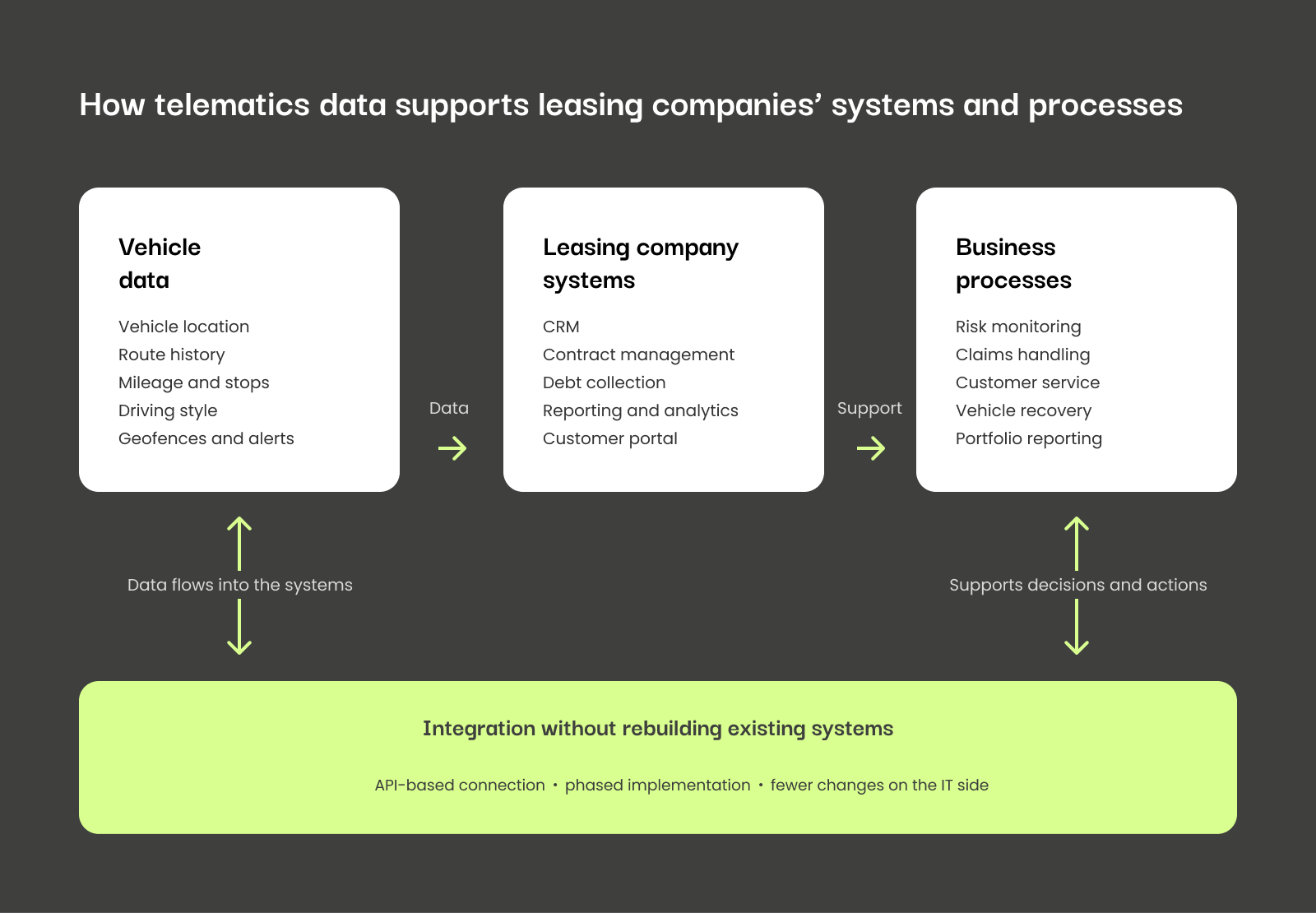
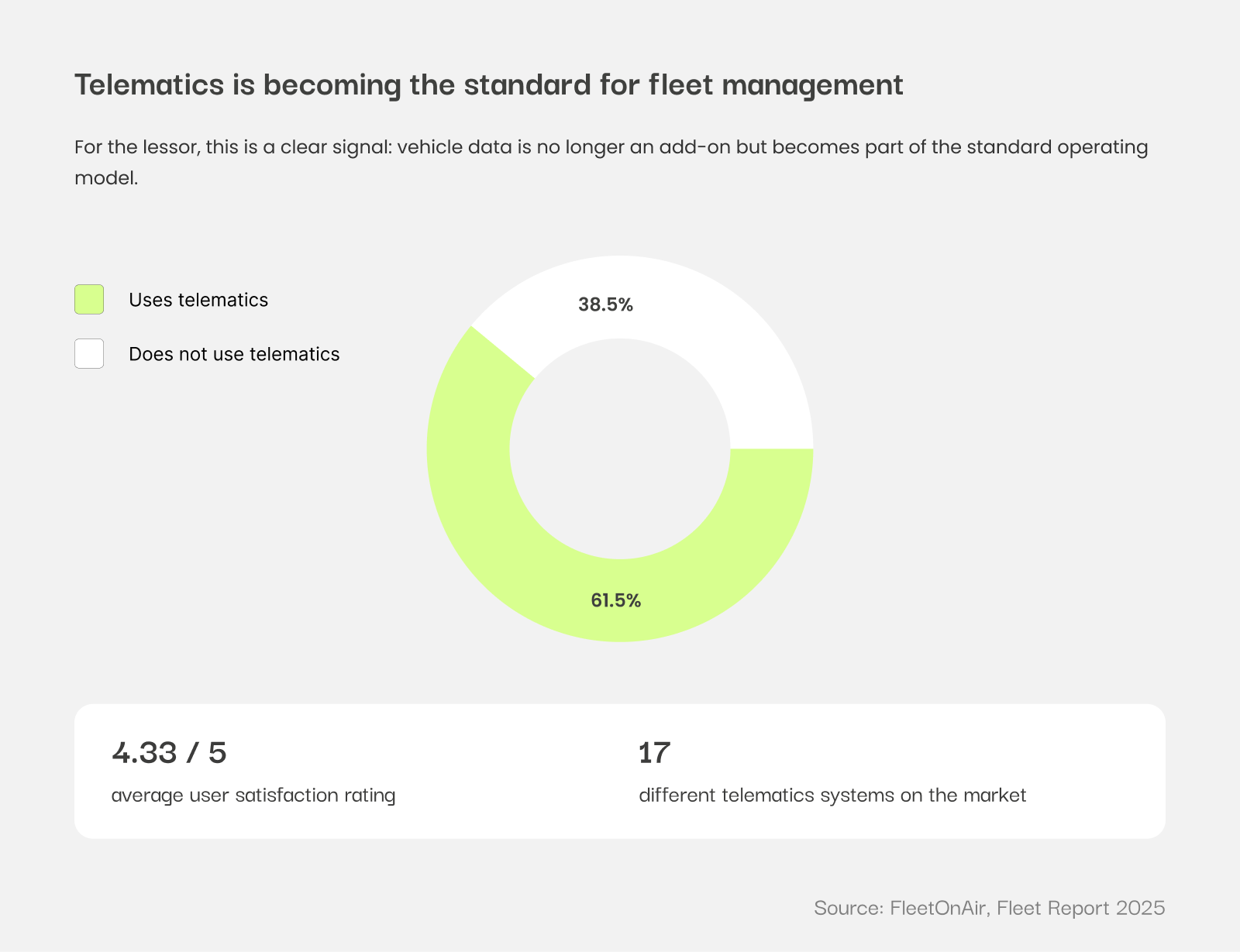
One of the common problems in companies is system fragmentation. Vehicle data is stored in one place, fuel card information in another, service history in a third system, while reports are still prepared in spreadsheets. In addition, many different providers operate on the market, which makes it harder to build a consistent picture of the fleet.
Effective fleet management requires integration. Data from vehicles, GPS tracking systems, a mobile app, fuel cards, maintenance alerts and reporting modules should support one objective: better control, lower costs and higher-quality decisions. Only then can fleet management software be used strategically, not only operationally.
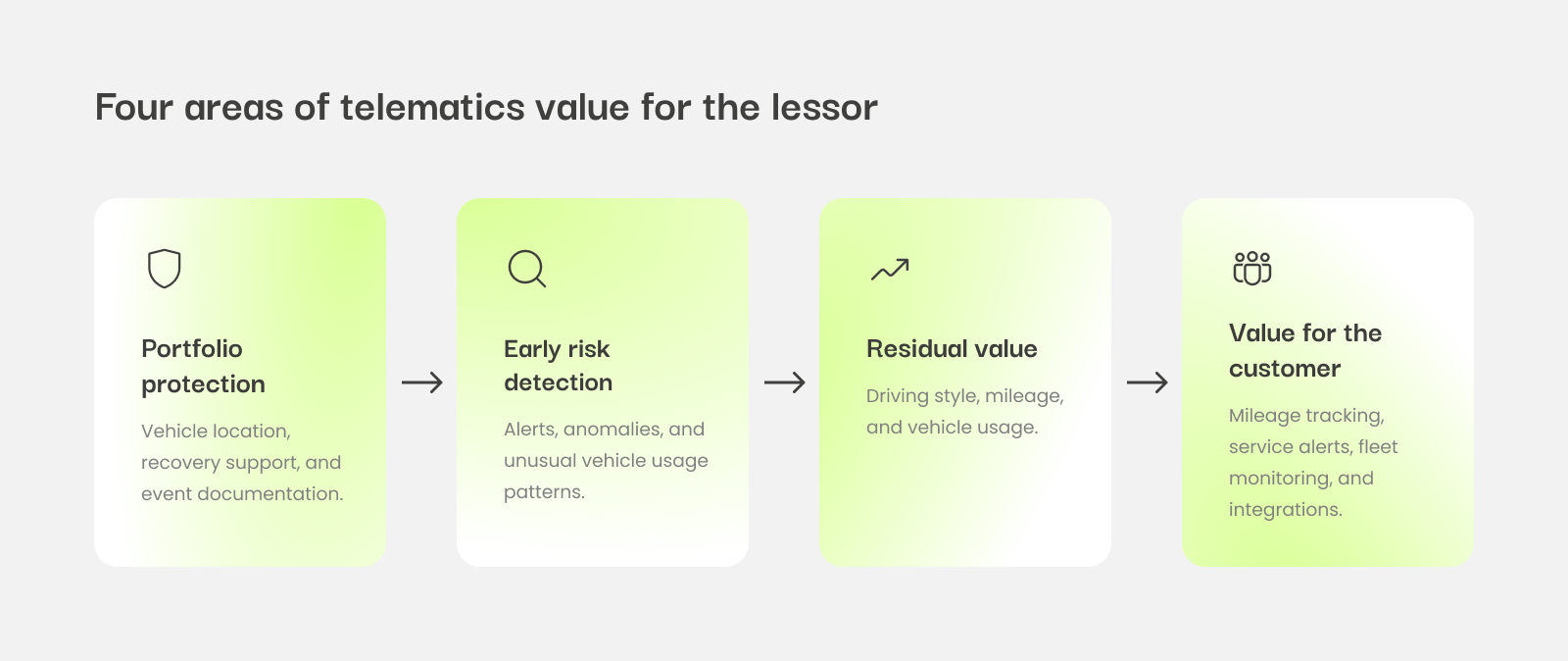
For leasing companies, this has additional importance. Fleet telematics data can support discussions with insurance companies, portfolio risk assessment, debt collection processes, residual value analysis and the development of new services for fleet clients. By combining technology, data and processes, leasing companies can build an advantage that vehicle financing alone does not provide.
Driver behaviour, driver training and fleet safety depend on data
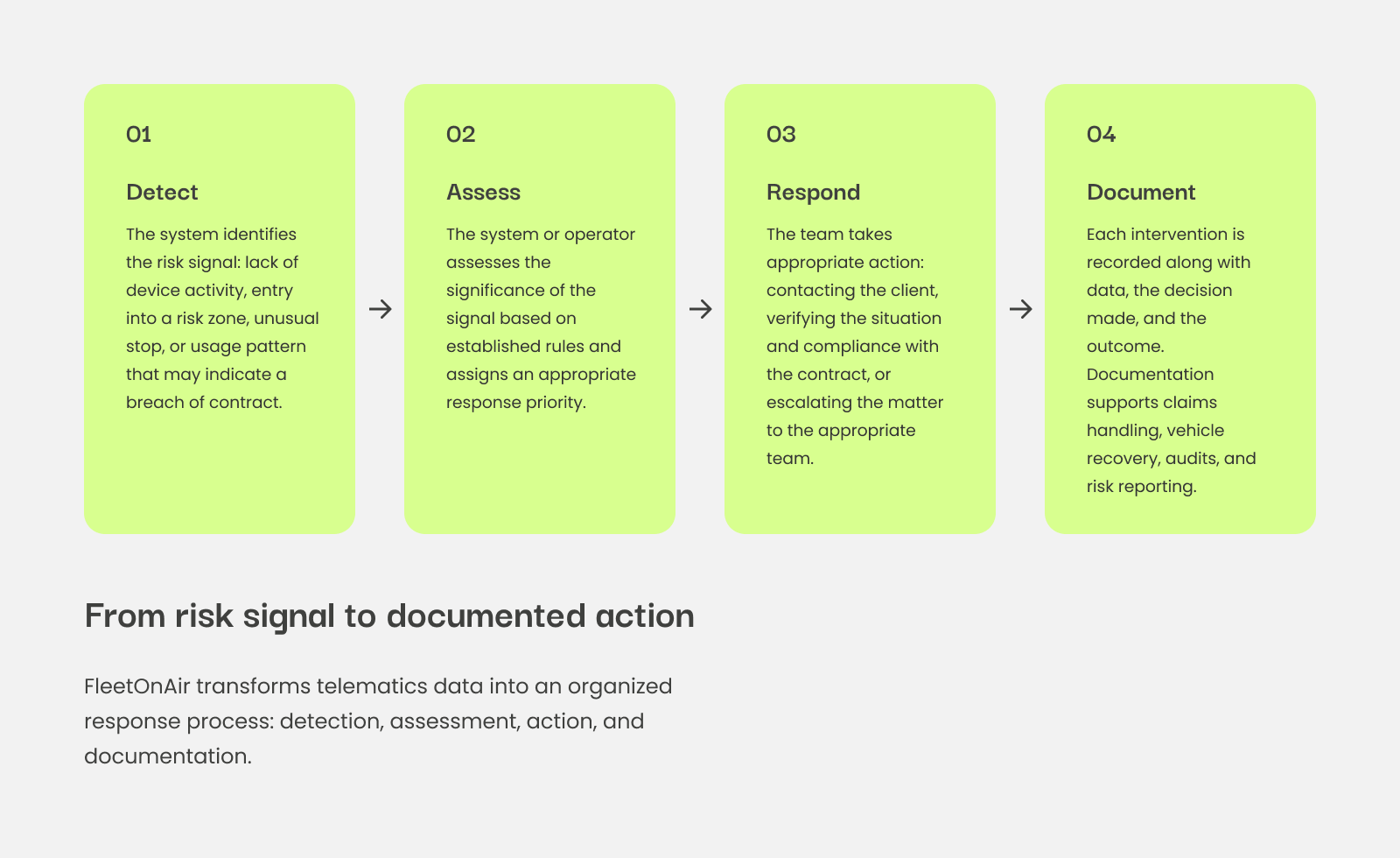
Without telematics, the assessment of driving style is often based on consequences: claims, fines, complaints or above-average vehicle wear. That is too late. Driving behaviour analysis makes it possible to detect risk earlier and work on improving fleet safety.
Data on harsh braking, aggressive acceleration, night driving or speeding helps identify drivers who need support. Combined with driver training, motivation programmes and clear vehicle usage rules, this can help protect drivers, improve safety and reduce claims.
This is particularly important in leasing. The condition of a vehicle at the end of the contract is not accidental. It is the result of thousands of decisions made by drivers every day. Fleet telematics gives leasing companies and fleet operators a way to influence those decisions earlier, before the cost appears in the final settlement.
Fleet managers need better data, not more data
In many organisations, the problem is not a lack of information, but too much fragmented information. A fleet manager does not need another report that nobody reads. They need data that is current, clear and connected with business goals.
Good fleet management software should help answer specific questions: which vehicles generate the highest fleet costs, where costs can be reduced, which drivers need support, what fuel consumption looks like, which routes are inefficient, where claims risk is increasing and whether company vehicles are being used in line with company policy.
This is where fleet telematics becomes a management tool. It does not only show a point on a map. It shows context, risk and possible action.
Fleet management solutions as a competitive advantage for leasing companies
The conclusion is clear: companies that rely only on declarations and historical reports operate with a delay. Companies that use fleet telematics can react faster, control costs more effectively and protect their assets better.
Fleet telematics helps with tracking vehicles, data analysis, fuel management, driver safety, cost optimisation and the development of services for clients. In the leasing industry, its importance is even greater because it concerns not only individual vehicles, but the quality of the entire asset portfolio.
With data, a leasing company can assess risk more accurately, support vehicle recovery, analyse vehicle usage, limit losses and strengthen its position towards insurers and financing institutions. This is a shift from reactive event management to work based on signals, data and well-designed processes.
Download the free FleetOnAir guide
If you want to see how vehicle data can reduce risk, support asset recovery, improve residual value and strengthen a leasing company’s position towards insurers and financing institutions, download the FleetOnAir white paper:
“Telematics in the leasing industry. How vehicle data reduces risk, improves portfolio quality and builds competitive advantage.”
It is a practical guide for leasing companies, CFM providers, fleet operators and organisations that want to move from reactive event management to fleet management based on data, warning signals and well-designed processes.
Get the guide.
Fill out the short form to access the download.