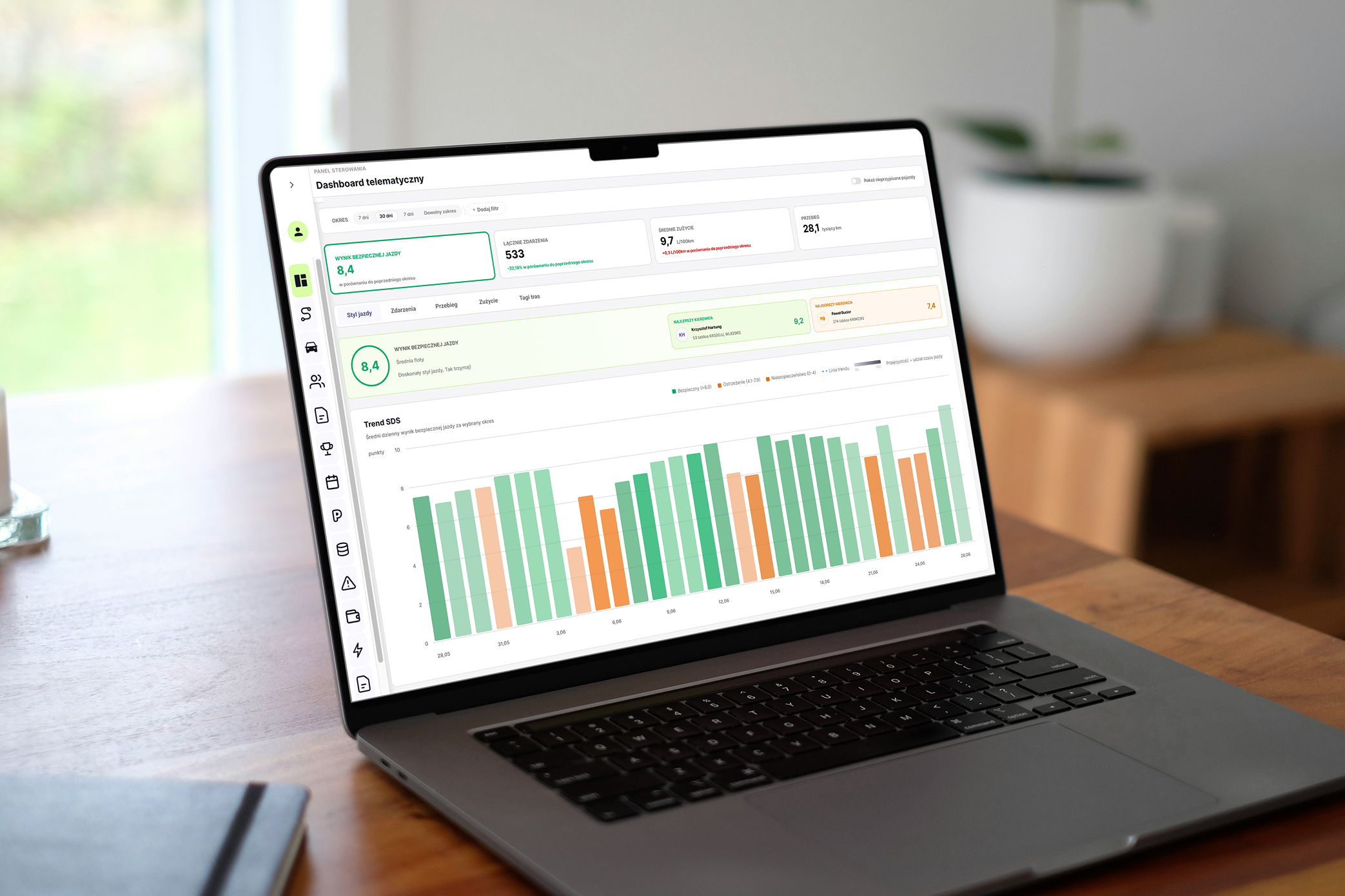
Driving behaviour analysis provides insights into how drivers behave behind the wheel, but assessment alone is not enough to change their habits over the long term. Notifications and driver scores can become familiar, and initial interest in results may give way to routine. How can fleet managers use telematics data to sustain driver engagement and encourage safer, more economical driving?
Fleet gamification extends the capabilities of Safe Driving by combining driving behaviour analysis with competitions, leaderboards and rewards. These game mechanics give driver scores a practical purpose. Clear rules, fair comparisons and recognition of good results motivate drivers to work consistently on their habits. For fleet managers, this creates a structured way to connect everyday driver behavior with fleet safety objectives.
Driving Behaviour Analysis: How Driver Scores Reflect Driver Performance
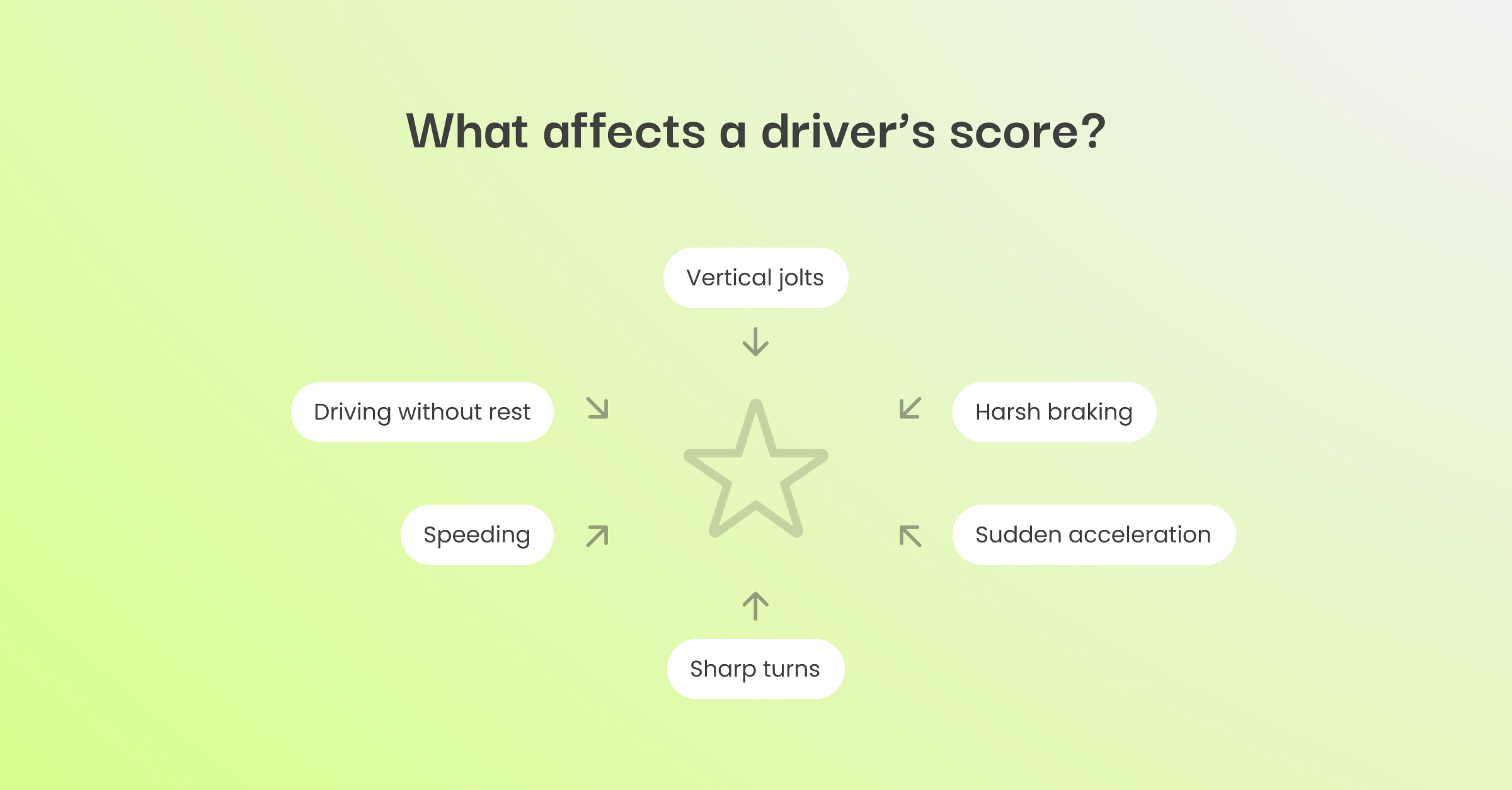
Fleet gamification is built on driving behaviour analysis and a points-based assessment of driver behavior. Events classified as undesirable lower driver scores. The analysis considers harsh braking, rapid acceleration, sharp cornering, vertical jolts and driving without a break for longer than a predefined limit.
Speeding is another important factor. The telematics system records both instances of exceeding a set maximum speed, such as 140 km/h, and violations of posted speed limits. These events contribute to the individual driver’s safety score and provide specific points for discussion about road safety.
However, driver scores should not follow a rigid, one-size-fits-all approach. A company can define tolerance thresholds and the parameters beyond which an event is classified as undesirable. This allows the assessment to reflect vehicle types, working conditions, route characteristics and the organisation’s safety policy. A fleet operating mainly in urban areas may require different settings from a team making long international journeys.
A well-configured safety score is therefore more than an abstract assessment of driver performance. It gives fleet managers and drivers a shared basis for discussing specific events. By reviewing driver scores over time, they can identify areas for improvement, track changes in driver behavior and discuss how to improve driver safety.
Fleet Management: How Fleet Managers Can Set Fair Competition Rules
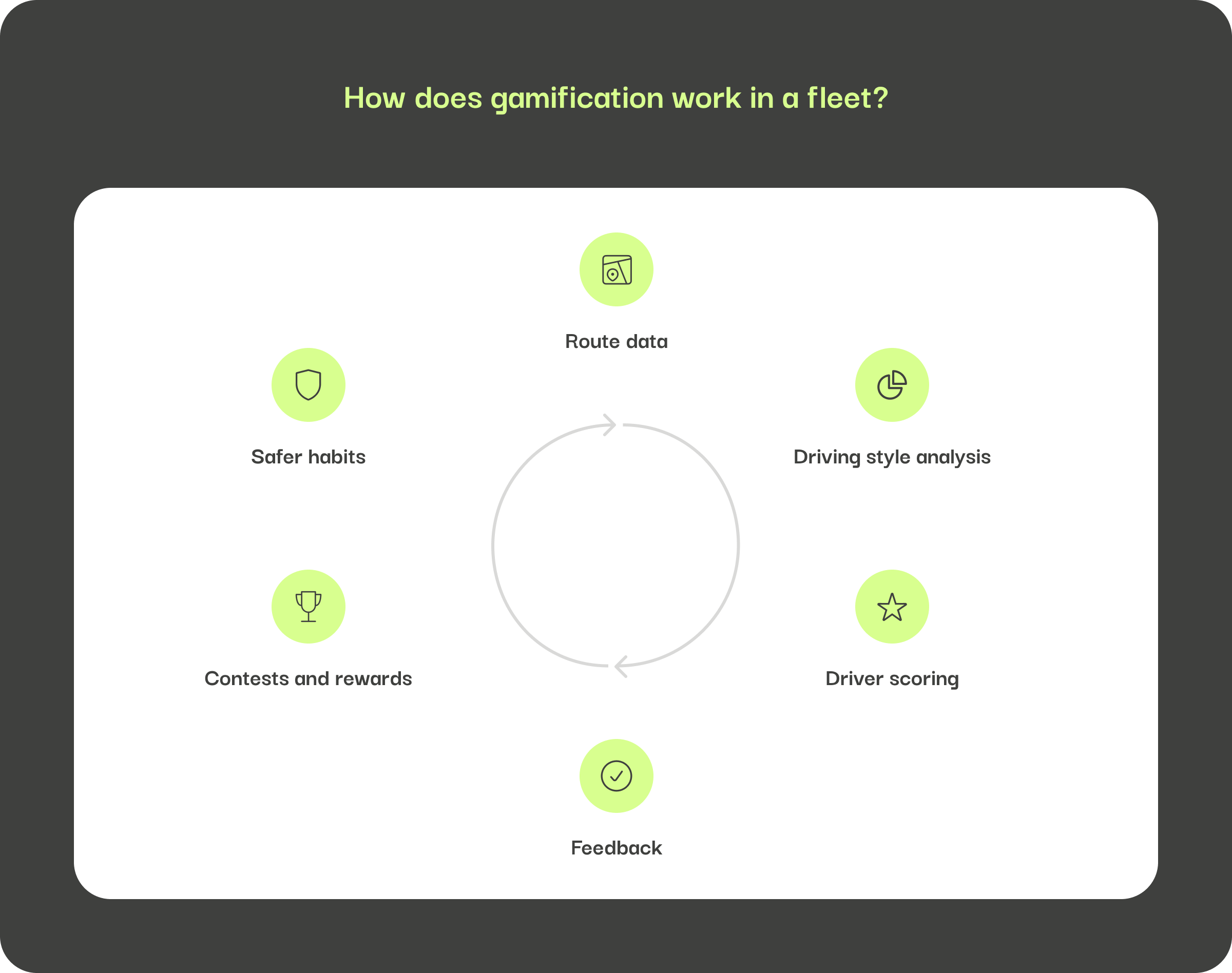
The competition element turns driver scores into an incentive to improve, making gamification a practical part of fleet management. When setting up a competition, the organiser defines its duration, participants, individual or team format, number of prize-winning places, rewards, and terms and conditions.
All essential information is available in the mobile app, giving drivers access to the rules before the competition starts and allowing them to check their position throughout. Transparent driver league tables help participants understand where they stand and support healthy competition.
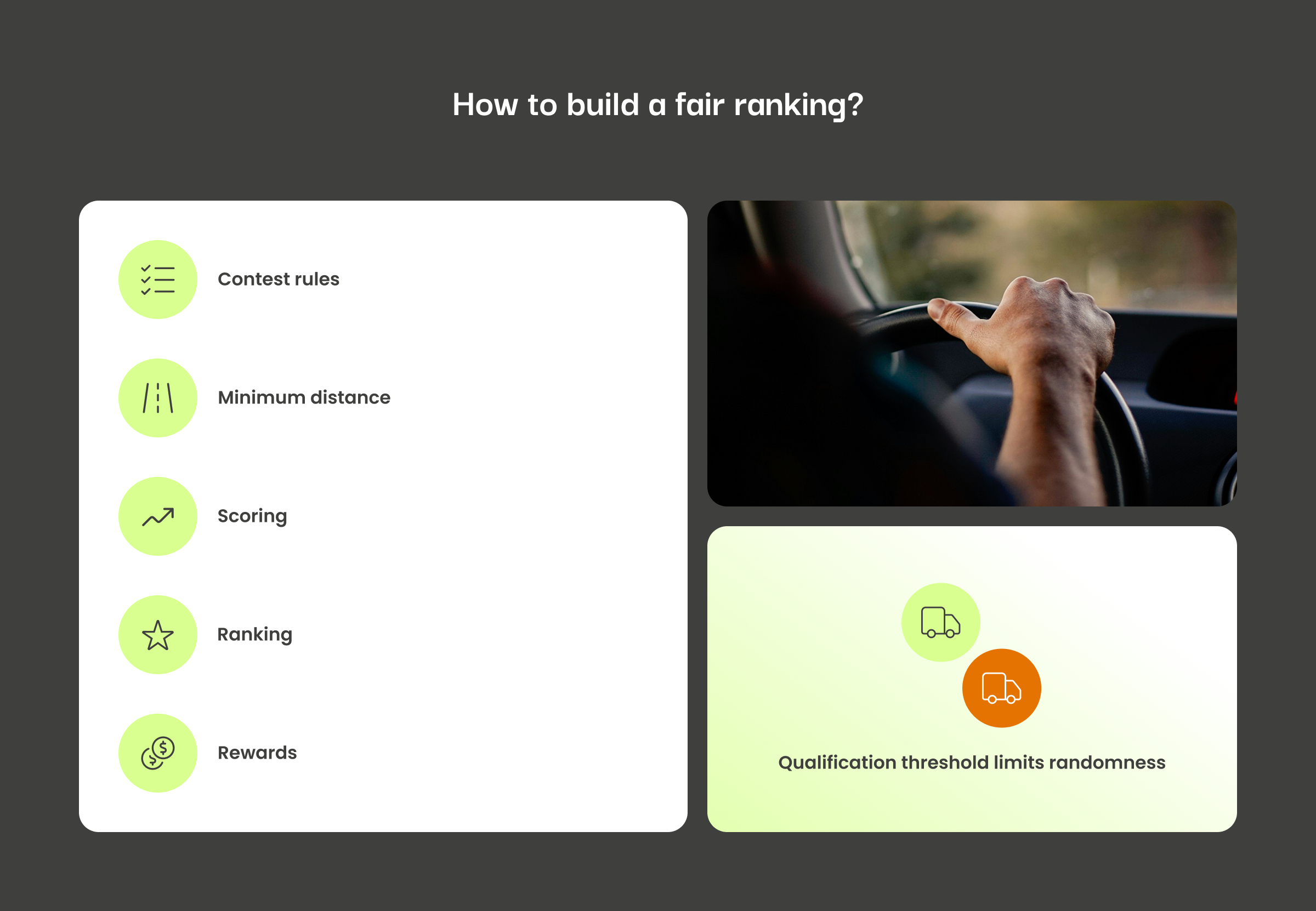
One of the key parameters is the minimum distance required to qualify for the leaderboard. Without this condition, a driver who has covered just 50 kilometres with an excellent safety score could compete on the same terms as someone travelling 5,000 kilometres a month.
A qualifying threshold reduces the influence of chance and makes comparisons between driver scores more reliable. It provides a basic safeguard against obvious distortions in the rankings. Fleet managers should consider this threshold alongside participant grouping so that the competition reflects the conditions in which fleet drivers work.
Driver Engagement: Individual or Team Competition?
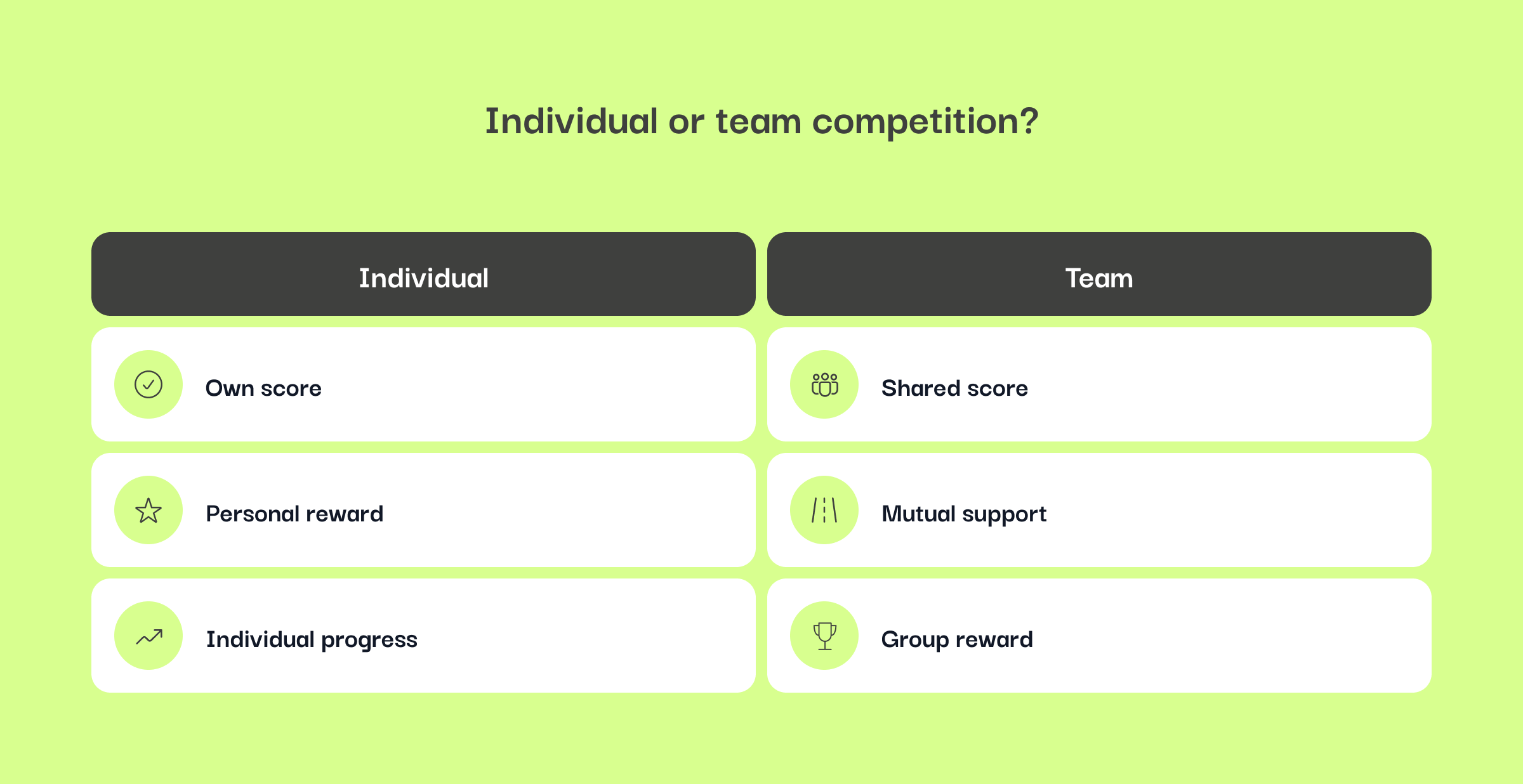
In an individual competition, each driver works towards their own result and competes independently for a reward. This format is simple, clear and effective at highlighting personal improvements. Participants can compare driver scores, track their leaderboard positions and adjust their behavior on subsequent journeys.
A team competition introduces an additional mechanism: responsibility for a shared result. Teams compete against one another, and participants with lower driver scores can receive support and encouragement from their teammates. Safer driving becomes a shared goal that encourages discussion, practical advice and mutual support.
This collective approach can strengthen driver engagement by connecting personal improvements with team success. It also creates opportunities to discuss driver behavior in the context of a common road safety objective.
The choice of format depends on the organisation’s culture. When employees perform similar tasks and identify strongly with their team, group competitions can increase engagement. For employees who work more independently, an individual leaderboard may be more appropriate. Fleet managers can also alternate between the two formats.
Driver Safety and Fleet Safety: Reward Progress Rather Than Apply Penalties
Effective fleet gamification should provide positive motivation. Drivers can earn rewards, but failing to win does not result in an additional penalty. This distinction is essential when the aim is to improve safety through recognition and participation.
The programme should reward drivers for good results and improvements, while making the relationship between driver behavior and road safety clear. Participation should be associated with development and recognition rather than finding someone to blame.
When the rules are transparent and rewards reinforce the desired behaviours, fleet data becomes a useful basis for constructive conversations. Driver scores help participants understand their results and focus on changes that support fleet safety. The purpose is to encourage consistent progress, with the competition serving the broader goal of safer driving.
Why Fleet Gamification Needs Breaks to Keep Drivers Engaged
Constant competition quickly loses its novelty. A leaderboard displayed all year round may fade into the background after a few months and no longer attract much interest. To keep drivers engaged, it is better to organise several clearly separated competitions throughout the year.
Each edition can run for around four to six weeks, followed by a break to review the results and prepare the next round. This gives drivers a defined period in which to focus on their performance and a clear point at which their efforts are recognised.
Running competitions periodically builds anticipation and helps renew interest. Each edition can feature a slightly different theme, team composition or type of reward.
The break also gives fleet managers time to assess the programme. They can review driver scores, consider whether the thresholds were appropriate and check whether the minimum distance supported fair comparisons. Looking at competition results alongside telematics data helps them assess changes in driver behavior and decide which rules need refinement.
Recognising the Best Drivers: Rewards Beyond Financial Bonuses
A cash bonus is just one way to recognise the best drivers. Depending on the company’s culture, rewards can include vouchers, physical prizes, attendance at an event or a special experience.
In a large organisation, an informal meeting with senior management may be an appealing form of recognition. Its value goes beyond money: it provides an opportunity to get to know the people leading the company and highlights the significance of the achievement. Recognising top drivers in this way can also demonstrate that their contribution to fleet safety matters to the organisation.
Charity competitions are another option. The company allocates a pool of funds for a public benefit organisation, and the winning driver or team chooses the beneficiary. Safer driving is then linked to a social cause, while the reward strengthens participants’ sense of impact and community.
The best rewards are not always the most expensive. They should suit the participants, the organisation and the values being promoted. Management involvement strengthens the programme’s credibility by showing employees that road safety is part of the wider company culture.
Implementing Gamification Solutions in Day-to-Day Fleet Management
Introducing gamification solutions is a structured process that extends beyond launching a leaderboard. Fleet managers need to connect safety objectives with clear employee communication and define the scope of analysis, scoring parameters, participant groups, competition duration and rewards.
Drivers should understand the entire process before the first competition begins. The following principles help translate telematics data into an organised programme that supports fleet goals.
A clear objective
Start with improving safety and developing defensive driving habits. Participants need to understand why their behavior is being assessed, which actions they are aiming to reduce and how the competition supports fleet safety. The leaderboard should serve these objectives.
Transparent driver scores
Explain the assessment criteria, tolerance thresholds and the way events affect driver scores. Drivers should understand how harsh braking, rapid acceleration or speeding influence their results. A score without an explanation offers little guidance and may create distrust.
Prompt feedback
Feedback after a journey allows drivers to connect their results with specific behaviours. The app should show both driver scores and the events that contributed to them. Providing drivers with this context helps them understand which habits require attention.
Fair conditions
A minimum qualifying distance and appropriate participant grouping make results more comparable. The rules must clearly define the competition’s duration, ranking criteria, number of prize-winning places and types of rewards. Participants should understand these conditions before the first journey counts towards their result.
Positive motivation
The competition should recognise good results and improvements without becoming an additional system of penalties. Team competitions should make use of mutual support, helping drivers work towards shared safety objectives.
Regular competitions and evaluation
Several shorter competitions held at intervals usually maintain interest more effectively than a single, never-ending leaderboard. After each edition, review the outcomes, assess the rules and refine the next round. Tracking driver scores over time helps fleet managers evaluate safety performance and look for sustained changes in driver behavior.
Motivate Your Drivers to Drive More Safely
Would you like to introduce fleet gamification into your organisation? Contact us to discover how FleetOnAir can combine driving behaviour analysis with engaging competitions. We will help you tailor driver scores, competition rules and rewards to your fleet’s specific needs and your company’s objectives.