An accident, a minor collision or a scratch is a visible outcome. Before it happens, however, there are often smaller events: sudden acceleration, harsh braking, speeding or driving for too long without a break. Driver behaviour monitoring helps identify, assess and discuss these events after a trip. This analysis supports prevention by helping to recognise and reduce undesirable behaviours that, over time, may lead to tangible damage across the fleet.
Driver performance: a consistent basis for fleet managers
The Safe Driving module is at the heart of FleetOnAir. It identifies behaviours that affect vehicle safety and operating efficiency, then gives drivers the information they need to reduce similar events. Driver scoring therefore goes beyond recording a manoeuvre or assigning a single score: it provides a basis for understanding driver performance.
The starting point is context: what happened on the road, where it happened and how significant the recorded event was. With this information, driver scoring becomes more than an abstract number. It helps drivers assess their own behaviour and consider whether they could have reacted differently. For fleet managers, the same information provides a basis for discussing driver performance and supporting safer driving.
Effective fleet management relies not only on accident and damage reports, but also on identifying undesirable driver behaviour before more serious consequences occur. Regular analysis helps fleet managers identify patterns and recognise drivers whose driving style is associated with greater driver risk. The collected fleet data provides a consistent picture of driver behaviour and highlights areas for improvement.
The key idea: driver behaviour monitoring focuses on minor behaviours to help reduce the risk of collisions, accidents and other damage.
Driver monitoring: what does driver behaviour telematics measure?
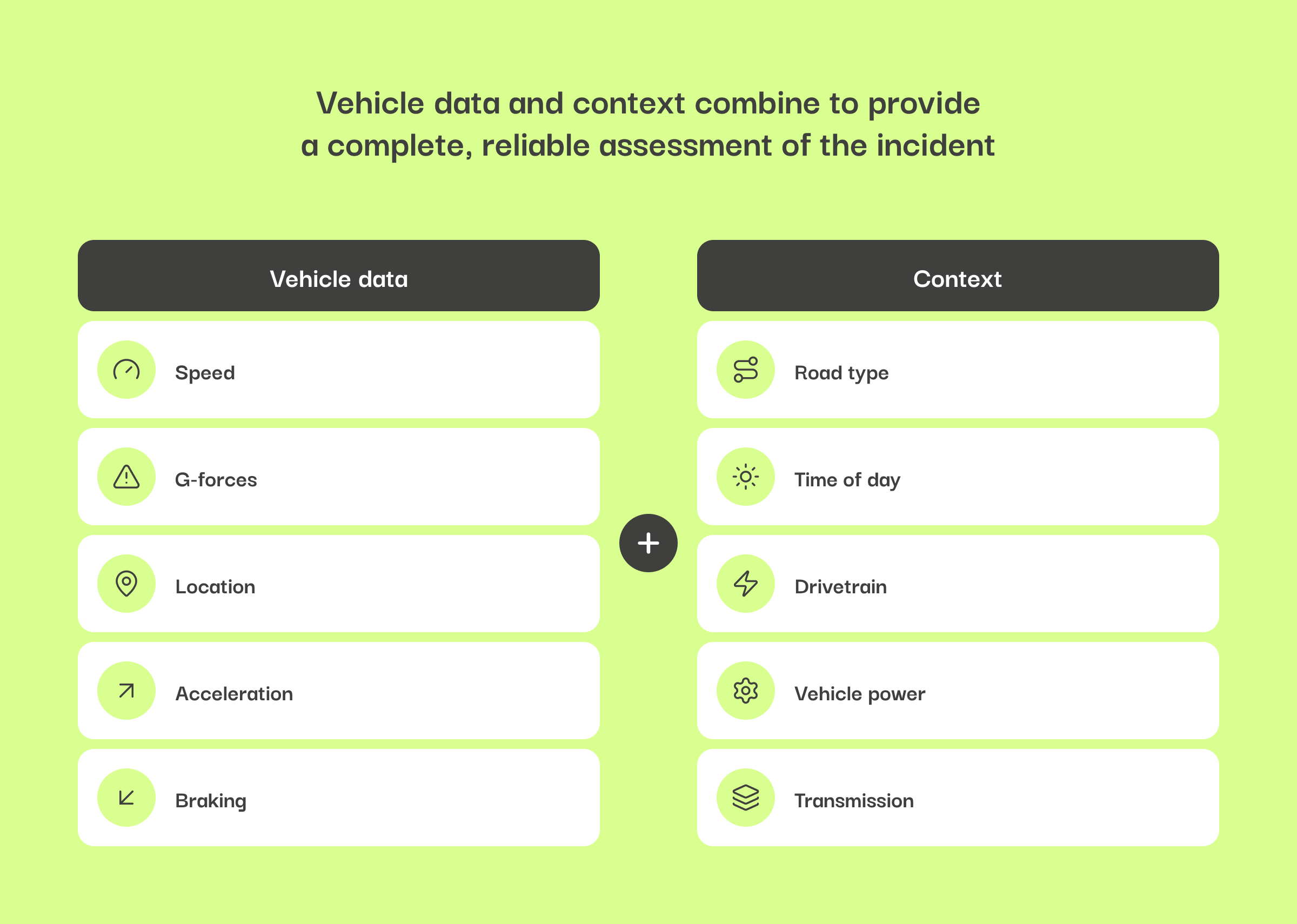
The module relies on a device installed in the vehicle, containing an accelerometer, a gyroscope and a SIM card. The system collects data on g-forces, vehicle location and speed. These telematics data show how drivers operate vehicles during acceleration and braking, as well as cornering.
Measurements from telematics devices alone are not enough to assess driving behaviour. Contextual analysis adds the road type, time of day and vehicle specifications. It also considers front-wheel, rear-wheel or four-wheel drive, vehicle power and whether the transmission is automatic or manual.
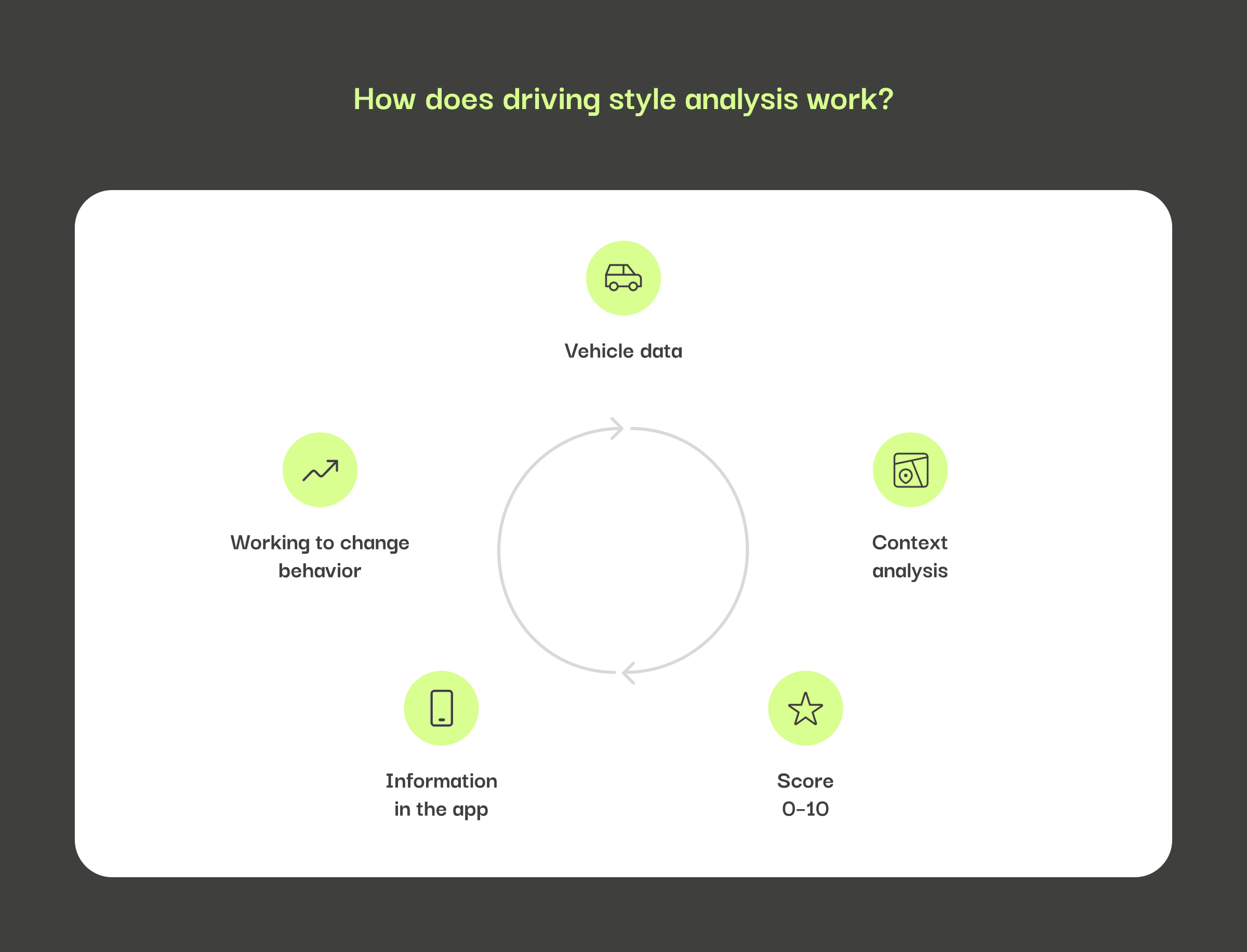
Driver behaviour telematics combines measurements from telematics devices with information about the conditions in which an event occurred. This provides fleet managers with the context needed to interpret driver performance. Driver scoring translates the combined analysis of telematics data and context into a numerical result describing driving style, rather than treating every recorded manoeuvre in isolation.
How does driver scoring work? The Safe Driving scoring system
The Safe Driving Score ranges from 0 to 10, with zero as the minimum and ten as the maximum. The scoring system also assigns each result to a red, orange or green zone. These are key features of the assessment: driver scoring gives fleet managers a numerical result, while the colour zones make it easier to interpret.
Driver scoring reflects behaviours recorded during a trip. Events that lower the score include:
- harsh acceleration or uneven acceleration;
- harsh braking;
- harsh cornering;
- vertical jolts;
- exceeding the permitted driving time without a break;
- exceeding posted speed limits;
- exceeding the maximum speed set for a particular vehicle.
Speed is assessed on two levels: the limit indicated by road signs and the maximum speed assigned to the vehicle. Both influence driver scoring. Details of an event can be reviewed in the trip record, helping drivers understand how their driving behaviour affected the result.
The fleet administrator can set a time tolerance in seconds and a speeding tolerance in km/h. These settings adapt the scoring system to actual vehicle usage and reduce the recording of brief, minor exceedances while maintaining oversight of behaviours that increase risk. For fleet managers, this provides a configurable basis for assessing driver behaviour.
Driver scoring also relates events to active driving time. This is intended to reduce the advantage that drivers travelling mainly outside urban areas might otherwise have over those working in city traffic. Actual time spent driving provides a common basis for comparison.
Comparing driving behaviour and driver performance across the fleet
Calculating the number of events per unit of active driving time structures the comparison of driver performance. Fleet managers can interpret results in relation to how vehicles are used, rather than automatically comparing long journeys outside cities with trips made mainly in urban traffic on identical terms. Driver scoring therefore considers both the events and their context.
Driver behaviour tracking provides a shared approach across fleet operations. The same types of behaviour are recorded for each vehicle, while the analysis considers active driving time and the conditions of use. This contextual approach to driver scoring also matters when results are used in incentive modules or competitions between drivers.
The aim is consistent performance evaluation. Driver behaviour should be assessed in relation to the work being carried out, so that comparisons support fleet management without separating a score from the circumstances behind it.
A driver behavior monitoring system with feedback in the mobile app
Drivers receive their results through the FleetOnAir mobile app. If the system identifies events after a trip has ended, the driver receives a push notification. Opening it displays the event's location, type and significance. These key features connect driver scoring with the details needed to understand a result.
This shortens the gap between driver behaviour and its analysis. Drivers can review a recently completed trip and consider whether they could have responded differently. Monitoring driver behavior is therefore linked to a specific event and place, rather than only to an overall score.
Repeated feedback after trips supports daily microlearning and defensive driving. This approach to driver coaching is intended to improve driver performance through reflection on actual situations. Driver scoring and event details give drivers a practical basis for developing safer driving practices.
Driver coaching: understanding harsh braking at an amber light
Aggressive driver behaviour can appear in repeated sequences of abrupt acceleration, harsh braking and harsh cornering. These events influence driver scoring, but each manoeuvre should be assessed in context. Braking sharply when a traffic light turns amber illustrates why that context matters.
From the driver's perspective, the situation may seem to be a choice between stopping abruptly and continuing through the junction. Driver coaching directs attention to an earlier stage: observing the road and signals, considering how long the current signal has been displayed, and adjusting speed to the situation.
Depending on the circumstances, easing off the accelerator or starting engine braking earlier could have reduced the need for harsh braking. The example shows why monitoring driver behavior should include reflection on decisions made before the manoeuvre itself.
The aim is to reduce situations in which abrupt acceleration or braking becomes necessary. Understanding how events affect driver scoring can help drivers recognise where earlier responses to road conditions could support safer driving practices.
Driver monitoring systems and road safety: addressing behaviour before damage occurs
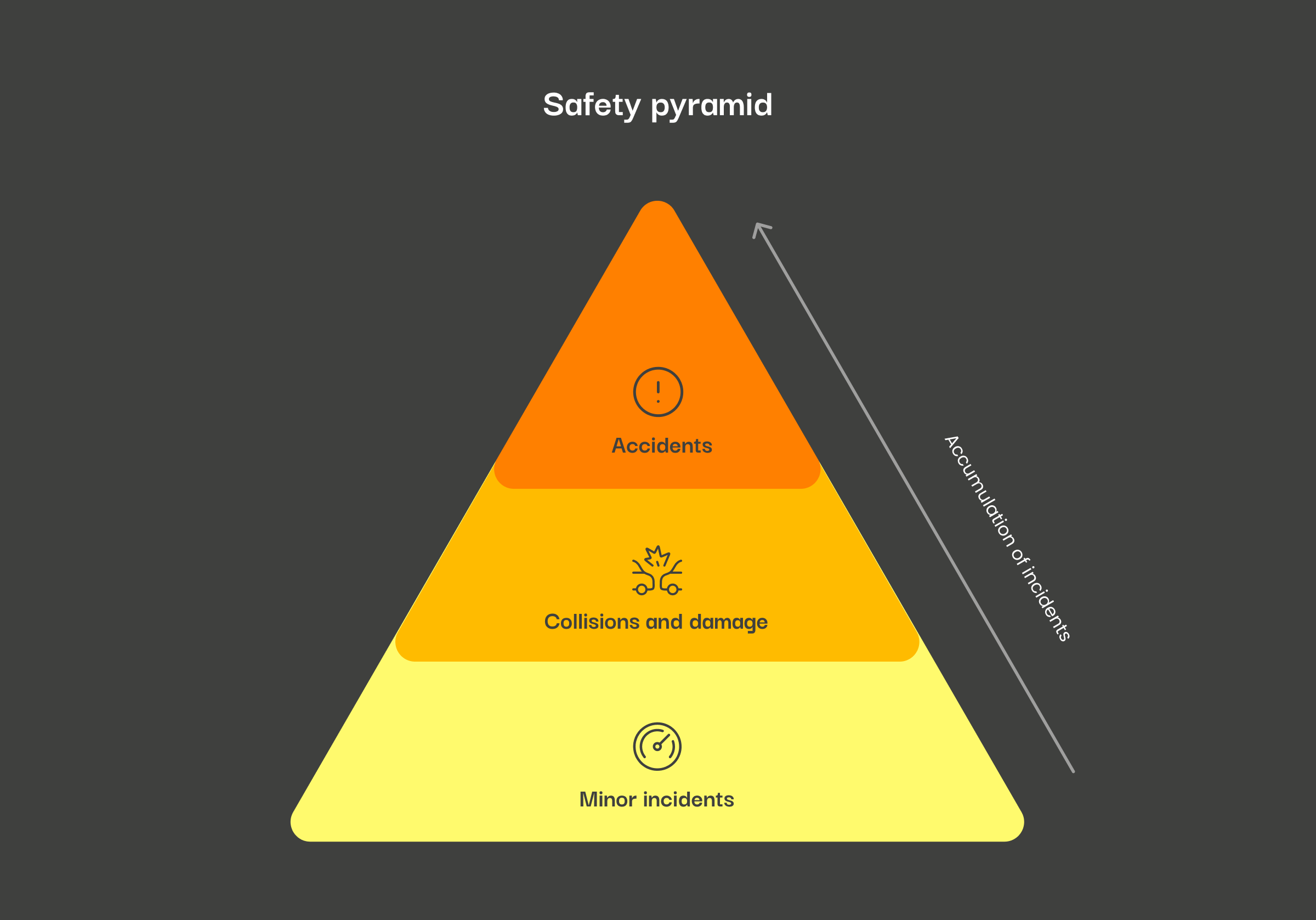
The safety pyramid model illustrates the module's approach. Safe Driving focuses on its lower levels: identifying and reducing minor events that, when they accumulate, may lead to damage of varying severity. Regular driver monitoring is intended to support driver safety and reduce accident risk.
For fleet managers, this creates an opportunity to address driver behaviour before damage occurs. Monitoring systems should support analysis rather than simply count harsh braking or speeding events. In FleetOnAir, the emphasis is on explaining where an event occurred and providing feedback that helps drivers change how they drive.
Driver scoring supports this process by making recorded behaviours easier to review. Combined with feedback, it provides a basis for continuous improvement and the gradual development of safe driving habits. Safer driving on individual trips contributes to the wider objective of fleet safety.
Fuel efficiency and fuel consumption: what driver scoring shows
Average fuel consumption alone is not enough to compare driver performance objectively. Acceleration, braking and speed all matter, but so do terrain, urban or national-road driving, vehicle type, engine type and engine capacity. Some of these factors are outside the driver's control, so higher fuel consumption does not necessarily mean less economical driving.
Safe Driving assesses driver behaviour in the context of a trip, rather than basing comparisons solely on fuel consumption. A score in the green zone, from 8 to 10 points, indicates safe and economical driving. However, it does not mean that the driver will always use less fuel than others in the fleet.
The relationship between driver scoring and fuel efficiency is easier to interpret when drivers use the same vehicles in similar conditions. This helps distinguish behaviours associated with higher fuel consumption from differences caused by the vehicles or their operating environment.
The distinction between the two indicators remains essential: driving style affects fuel consumption, but average fuel consumption itself does not affect the Safe Driving score. The scoring system assesses driver behaviour and context. It gives drivers feedback on the habits behind their results, supporting work towards more efficient driving habits.
Why is driver scoring important for driver engagement and fleet management?
Safe Driving provides a foundation for further fleet management features. These include incentive modules, gamification between drivers and linking private vehicle use to driving style. Driver scoring remains the common reference point for these functions.
Monitoring systems alone are not enough to change driver behaviour permanently. Over time, notifications and scores can become familiar, and initial engagement may give way to routine. If results are not linked to rewards or other consequences, motivation to maintain a high score may decline.
Incentive modules, gamification and linking private-trip charges to driving style assessment can help motivate drivers and sustain driver engagement. Their purpose is to maintain the focus on safety and efficiency beyond the initial period of using the system.
For fleet managers, driver scoring connects these activities with a consistent assessment mechanism: vehicle data, analysis of driving conditions and feedback delivered through the app. This information supports fleet management by providing a shared basis for working with drivers across fleet operations.
Driver behaviour analysis is therefore part of a broader approach to managing the fleet. The same assessment principles support discussions about driver performance and ongoing efforts to improve driver behaviour and develop safer driving.
FleetOnAir: driver behaviour monitoring for a safer, more efficient fleet
FleetOnAir combines vehicle data, driver scoring and feedback in a single solution. It supports fleet managers who want to reduce undesirable driver behaviour, strengthen driver safety and improve control over fleet efficiency. By connecting assessment with the context of each trip, Safe Driving helps turn driving data into practical information for working towards safer driving.